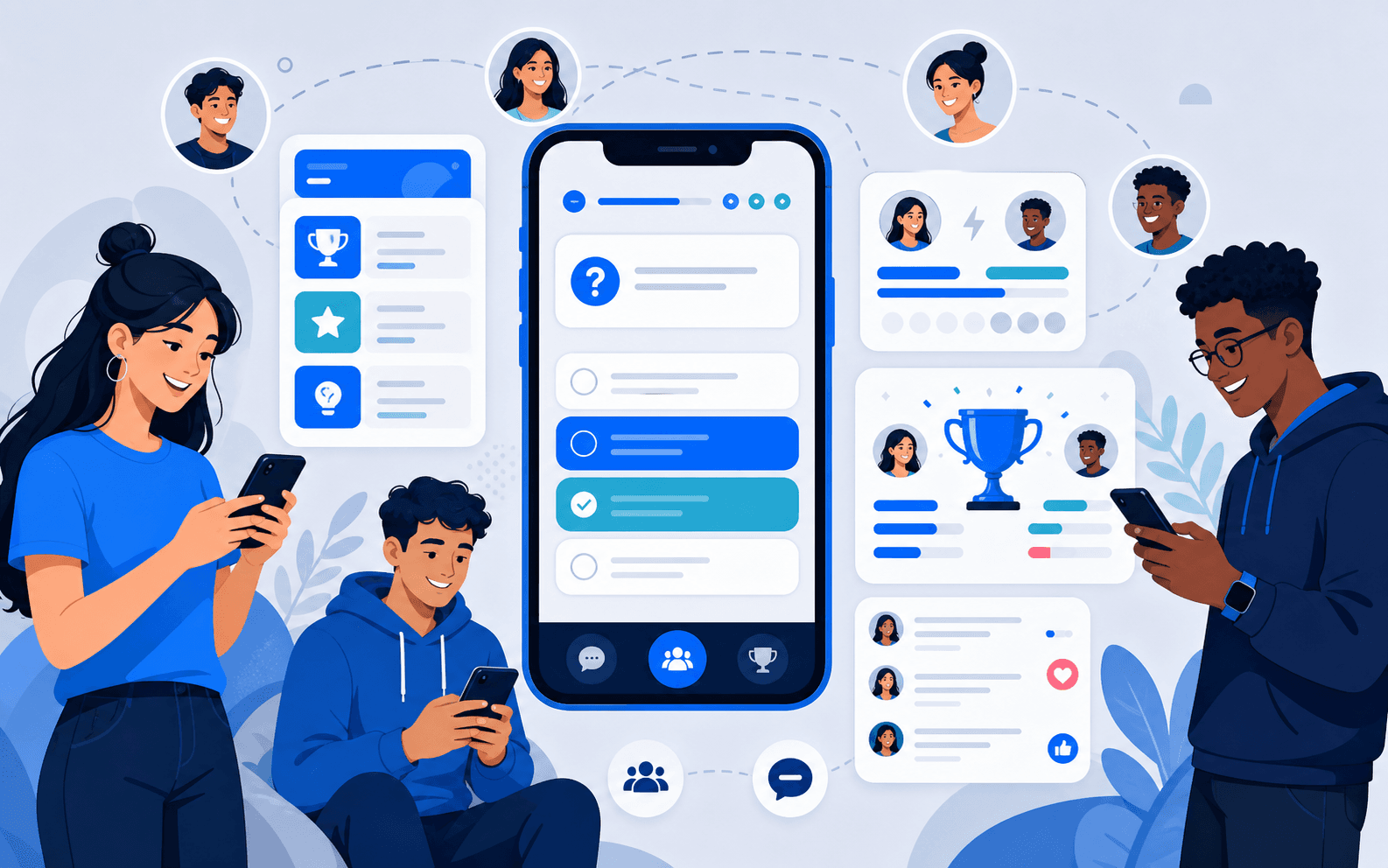
Overview
Spark's users already interacted with each other through Discord, but a bidding process benefits from a purpose-built interface that can communicate state and available actions precisely, something a chat channel alone struggles to do well. The product needed two environments, an established Discord community and a dedicated bidding interface, to complement one another rather than compete for the same role, since asking members to abandon a platform they already used well was never a realistic option. iEncode Tech built a Vue.js bidding interface backed by a Laravel and MySQL application layer, with a REST API layer connecting the two environments deliberately rather than incidentally. What distinguishes this case study from a typical bidding-platform build is the integration boundary at its centre: deciding precisely what belongs in the web product and what stays in Discord.
Where the integration requirement came from
Communities that already gather on Discord represent a specific product situation within online gaming and social engagement: the audience and its trust are already established somewhere else, and a new product has to earn a place alongside that existing space rather than trying to replace it. Spark's brief reflected that reality directly. The bidding workflow needed a dedicated interface precise enough for a transactional process, current standing, available actions, timing, but the community itself was never going to migrate away from Discord, nor should it have needed to.
The core challenge
Connecting a custom web product to an existing community platform raises integration questions that a standalone application never has to answer:
- Bidding state, what is currently open, current standing, time remaining, needed to be visible in the interface at a glance, not buried in chat history where a fast-moving bid could easily be missed
- The web interface and Discord needed clear boundaries around which actions belonged to which surface, so users were never confused about where to actually act
- Discord integration logic needed to sit in a maintainable API layer rather than being wired directly into product code in a way that would be brittle to change later
- The engagement's scope had to be represented accurately, without exposing or implying auction settlement or payment behaviour that had not been confirmed as part of the delivered platform
Discovery and defining the boundary
The discovery question that shaped everything else was where the line between the two environments should sit. Discord is genuinely good at conversation and community presence; it is not built to represent live, precise transactional state the way a purpose-built interface can. Rather than trying to replicate bidding functionality inside Discord, or trying to pull community discussion into the web product, the goal became keeping each environment doing what it already did well: Discord as the community's discussion space, the web interface as the place where bidding state is unambiguous.
Solutions
iEncode Tech owned the custom UI/UX and bidding-interface design, the Laravel backend, API development, Discord integration, and the core workflow implementation connecting them. The web interface was built as the structured interaction surface, the place where bidding state is unambiguous and available actions are clear, while Discord remained the community's existing space for discussion and coordination.
The API layer connected application behaviour with Discord so the community channel and product interface could participate in the same workflow without pretending they served identical purposes: Discord stayed the community layer, the web interface stayed the transactional layer, and the integration kept them synchronised. Keeping that integration logic centralised in the API layer, rather than scattered across the frontend, made the connection between the two environments easier to maintain and extend.
Designing for at-a-glance clarity
Because bidding activity can move quickly, the interface prioritised showing current state without requiring a user to hunt for it: standing, time remaining, and available actions were designed to be visible immediately on landing in an active bid, rather than requiring navigation to find them. Vue.js's reactivity model supported that directly, letting the interface reflect changing bid state instantly as it happens rather than on a manual refresh. Visual design deliberately avoided decorative elements that might compete with that state information for attention, since in a bidding interface, clarity about what is currently true matters more than visual flourish.
Building the platform
Bidding interface
A Vue.js interface communicates the state of a bidding flow clearly, current standing, available actions, and timing, at a glance, designed specifically for the pace at which bidding activity moves.
Backend and data layer
Laravel handles backend application logic, including bidding rules, user accounts, and the coordination layer that ties the interface to Discord, with MySQL storing bidding and listing records consistently.
Discord integration
A REST API layer connects the platform to the community's existing Discord space, so relevant bidding actions and updates surface where the community already interacts, without duplicating Discord's own conversational role inside the web product.
Authentication and notifications
Google-based sign-in and analytics give users a fast sign-in path and the team visibility into engagement, while MailGun and an SMS gateway deliver bidding notifications through channels users are likely to see promptly.
Technology and architecture
- Frontend: Vue.js builds the bidding interface, chosen for its lightweight reactivity model, well suited to a screen that must reflect changing bid state instantly as it happens.
- Backend: Laravel handles backend application logic, including bidding rules, user accounts, and the coordination layer that ties the interface to Discord.
- Database: MySQL stores structured bidding and listing records, keeping bid history and item data consistent and queryable.
- APIs and integration: REST APIs coordinate behaviour between the web platform and Discord, giving each surface a clear, maintainable contract for the data it needs, and Discord integration connects the platform to the community's existing space.
- Supporting services: Google APIs provide authentication and analytics; MailGun and an SMS gateway deliver bidding notifications and account communications; AWS (EC2, Lambda, S3, Route 53) hosts the platform and its background processing.
Where the build got hard
The genuine difficulty in this project was resisting the temptation to duplicate functionality across both surfaces once the integration existed. It would have been straightforward to let bidding controls creep into Discord commands, or to let community discussion features creep into the web interface, and either direction would have blurred the boundary that made the whole system legible to users. Keeping the API layer as the single source of coordination between the two, rather than letting either surface reach directly into the other, is what preserved that boundary as the product grew.
The second difficulty was representing the engagement's scope honestly. No auction settlement process or payment functionality was supplied as part of this project, and it would have been easy to imply a more complete transactional system than was actually delivered. This case study, and the platform it describes, are limited deliberately to what was confirmed: a coordinated bidding experience connected to Discord, not a full payment or settlement system.
Results and impact
Spark gained a dedicated product experience connected to its community environment, giving users a clear, purpose-built interface for bidding while keeping Discord in its natural role as the community's discussion space. The API-driven integration meant the two environments worked together without either one being stretched beyond what it does well.
No auction settlement process or payment functionality was supplied for this project, so neither is presented as part of the delivered platform. The engagement shows how iEncode Tech approaches third-party integrations as part of the product workflow itself, not as an isolated technical add-on bolted on after the fact.
What this project reinforced
When a product connects to an existing community or platform, the API layer is the right place to own that relationship, not the frontend and not a scattered set of webhook handlers. That principle now shapes every API development and integration engagement iEncode Tech takes on, including the very different integration challenges behind ZeroIQ's social gaming product.
Building a product that needs to connect with an existing community platform without duplicating it? Speak with iEncode Tech about an integration architecture that respects what each surface already does well, or see the Spark project overview for a portfolio-style summary of what was delivered.